
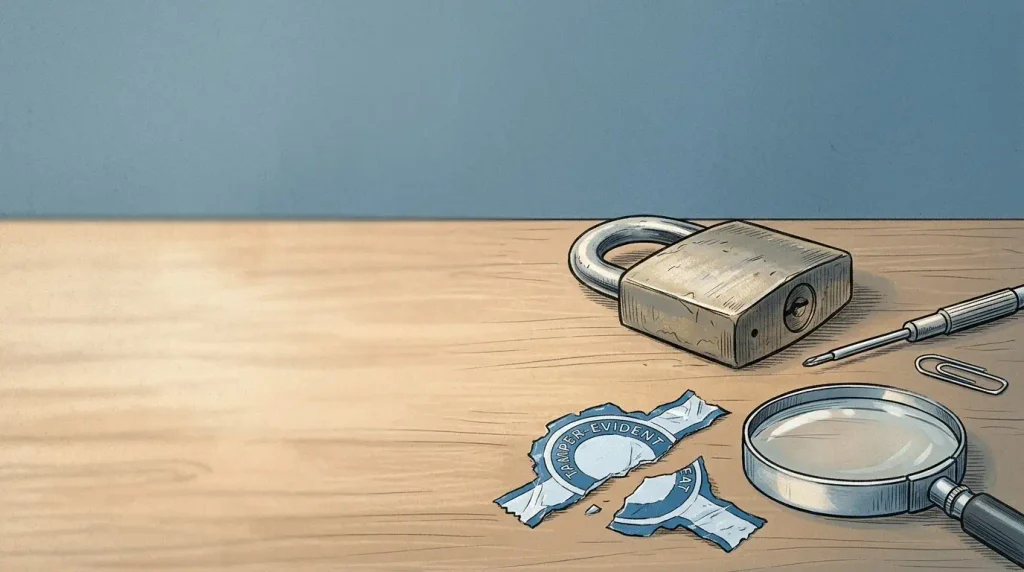
Another word for tampering is interference. Other common choices are meddling, tinkering, manipulation, and alteration. “Tampering” means touching, changing, or interfering with something without permission, usually in a harmful or dishonest way. The best alternative depends on what is being tampered with, such as a lock, a document, a machine, a witness, or a game.
Some alternatives focus on changing facts or records, such as falsification and doctoring. Others describe damage (sabotage), unfair control (rigging), digital intrusion (hacking), or casual fiddling (tinkering).
Quick list: interference, meddling, tinkering, manipulation, alteration, falsification, doctoring, rigging, sabotage, adulteration
This article looks at 30 alternatives. Each one has a meaning, IPA, a usage note, and an example, so you can see which word fits your context.
At a Glance: Tampering Synonyms and Related Alternatives
| Alternative | Part of Speech | Meaning | Register / Tone | Ideal Context |
| Interference | noun | Unwanted involvement in something | Neutral | General use, rules, signals |
| Meddling | noun | Getting involved in matters that are not your business | Informal to neutral, negative | Personal affairs, politics |
| Tinkering | noun | Making small changes, often to fix or improve | Informal, mild | Machines, software, hobbies |
| Manipulation | noun | Changing or controlling something to get a result | Neutral to formal, negative | Data, markets, results |
| Alteration | noun | A change made to something | Neutral to formal | Documents, clothing, records |
| Falsification | noun | Changing records to make them untrue | Formal | Legal, financial, scientific |
| Doctoring | noun | Changing something to deceive | Informal, negative | Photos, reports, evidence |
| Rigging | noun | Arranging a result unfairly in advance | Informal to neutral | Elections, contests, auctions |
| Sabotage | noun | Deliberate damage to stop something working | Neutral, strong | Machines, plans, projects |
| Adulteration | noun | Making a product impure by adding something | Formal | Food, drugs, fuel |
Which Word Should You Use?
| If you want to… | Use | Why |
| Describe someone getting involved where they should not | meddling | It suggests uninvited involvement |
| Talk about small, harmless changes | tinkering | It sounds mild and often playful |
| Describe false changes to documents or data | falsification | It is the standard formal word for records |
| Describe changing a photo or report to mislead | doctoring | It suggests secret, dishonest editing |
| Describe an unfair result arranged in advance | rigging | It is used for elections, contests, and bids |
| Describe deliberate damage to a machine or plan | sabotage | It focuses on causing failure |
| Describe harmful changes to food or medicine | adulteration | It means making something impure |
| Describe illegal entry into a computer system | hacking | It is the common word for digital intrusion |
Exploring the Multiple Meanings of “Tampering”
“Tampering” is the -ing form of the verb tamper. It is usually followed by with.
1. Interfering Without Permission
- Meaning: Meddling or interfering with something in a way that is not allowed or not wanted.
- Explanation: This is the core sense. The person has no right to touch or change the thing, and the result may be harmful or unwise.
- Example: The manager warned staff against tampering with the settings on the alarm system.
2. Altering or Falsifying
- Meaning: Changing something secretly or dishonestly, such as a record, a seal, or a product.
- Explanation: Here the change is meant to deceive. The word is common in legal and safety contexts, as in tamper-evident packaging.
- Example: Police said someone had been tampering with the records before the audit.
3. Damaging or Disabling a Device
- Meaning: Interfering with a lock, meter, machine, or vehicle so that it no longer works properly or safely.
- Explanation: This sense is physical or technical. The focus is on the device, not on a person or a record.
- Example: The company found signs of tampering on the electricity meter.
4. Illegally Influencing People in a Case
- Meaning: Trying to influence a witness, juror, or official in an improper way.
- Explanation: This sense is mainly legal. It is usually used in the set phrases witness tampering and jury tampering.
- Example: He was charged with witness tampering after he contacted the key witness.
5. Breaking Sports Rules
- Meaning: In sports, either discussing a contract with a player who is signed to another team, or illegally changing the condition of equipment such as a ball.
- Explanation: This is a specialized sense. The contract meaning is common in North American sports. “Ball tampering” is well known in cricket.
- Example: The league fined the team for tampering after its coach spoke to another club’s player.
Sources: Merriam-Webster; Dictionary.com; Wiktionary
Analyzing 30 Tampering Alternatives in Detail
Some alternatives below are close synonyms, while others are related words that fit only certain contexts. The usage notes say which is which.
Core Everyday Alternatives
1. Interference
IPA: US /ˌɪntərˈfɪrəns/ · UK /ˌɪntəˈfɪərəns/
Definition: The act of getting involved in something in a way that is not wanted or allowed.
- Usage: This is the closest general alternative. It is broader than “tampering” because it can be accidental or harmless.
- Example: The coach complained about outside interference in team decisions.
2. Meddling
IPA: /ˈmɛdlɪŋ/ (US and UK)
Definition: The act of getting involved in other people’s affairs without being asked.
- Usage: It is a close synonym for the “interfering” sense of tampering. It usually refers to people and situations, not to objects.
- Example: The company blamed government meddling for the delay.
3. Interfering
IPA: US /ˌɪntərˈfɪrɪŋ/ · UK /ˌɪntəˈfɪərɪŋ/
Definition: Involving yourself in a matter where you are not wanted.
- Usage: Often used as a verb form, as in “interfering with the lock.” It is a direct everyday synonym but sounds less technical than “tampering.”
- Example: Interfering with the smoke detector is dangerous.
4. Tinkering
IPA: /ˈtɪŋkərɪŋ/ (US and UK)
Definition: Making small changes to something, often to repair or improve it.
- Usage: This is a related alternative. It is milder than “tampering” and often has no bad intent.
5. Fiddling
IPA: /ˈfɪdlɪŋ/ (US and UK)
Definition: Touching or adjusting something in a restless or careless way.
- Usage: Informal. “Fiddling with” can mean harmless handling. In British English, “fiddling the books” means dishonest changes to accounts.
6. Monkeying
IPA: /ˈmʌŋkiɪŋ/ (US and UK)
Definition: Playing around with something in a careless or foolish way.
- Usage: Informal and usually found in the phrase “monkeying around with.” It is a casual related alternative and is not suitable for legal or formal writing.
Altering and Falsifying Alternatives
7. Manipulation
IPA: US /məˌnɪpjəˈleɪʃən/ · UK /məˌnɪpjʊˈleɪʃən/
Definition: Skillful handling or control, often in a clever or dishonest way.
- It can also be neutral, as in “manipulating a tool.”
- Example: Regulators investigated the manipulation of share prices.
8. Alteration
IPA: US /ˌɔːltəˈreɪʃən/ · UK /ˌɒltəˈreɪʃən/
Definition: A change made to something.
- Usage: This is a neutral word.
- Example: The bank noticed an alteration to the signature on the check.
9. Falsification
IPA: US /ˌfɔːlsɪfɪˈkeɪʃən/ · UK /ˌfɒlsɪfɪˈkeɪʃən/
Definition: The act of changing information or records so that they are untrue.
- Usage: A formal synonym for tampering with records. It does not fit physical tampering, such as with a lock.
10. Doctoring
IPA: US /ˈdɑːktərɪŋ/ · UK /ˈdɒktərɪŋ/
Definition: Changing something dishonestly, especially to deceive.
- Usage: Informal and negative. It is common with photos, reports, and evidence.
- Example: The newspaper apologized for doctoring the photograph.
11. Forgery
IPA: US /ˈfɔːrdʒəri/ · UK /ˈfɔːdʒəri/
Definition: The crime of making or changing a document, signature, or object in order to deceive.
- Usage: A related alternative. It means creating a fake, while “tampering” often means changing something that already exists.
12. Fudging
IPA: /ˈfʌdʒɪŋ/ (US and UK)
Definition: Changing facts or figures slightly to make them look better.
- Usage: Informal and milder than “falsification.” It suggests bending the truth, not a complete lie.
- Example: Fudging the numbers can still get a company in trouble.
Rigging and Unfair Influence Alternatives
13. Rigging
IPA: /ˈrɪɡɪŋ/ (US and UK)
Definition: Arranging a result unfairly in advance.
- Example: Observers accused the party of vote rigging.
14. Fixing
IPA: /ˈfɪksɪŋ/ (US and UK)
Definition: Dishonestly arranging the result of a contest or event.
- Usage: A related alternative, used mostly in sports and betting, as in “match fixing.” It does not mean “repairing” here.
- Example: The league banned players for match fixing.
15. Corruption
IPA: /kəˈrʌpʃən/ (US and UK)
Definition: Dishonest or illegal behavior, especially by people in power.
- Usage: A broader related word. It can include tampering with processes, but it does not describe the act of touching or changing something.
- Example: The report found corruption in the contract process.
16. Subornation
IPA: US /ˌsʌbɔːrˈneɪʃən/ · UK /ˌsʌbɔːˈneɪʃən/
Definition: The crime of persuading someone to do something illegal, such as lie in court.
- Usage: A formal, legal term. It is a related alternative for the witness tampering sense and is rare in everyday speech.
17. Bribery
IPA: /ˈbraɪbəri/ (US and UK)
Definition: Giving money or gifts to influence someone’s actions.
- Usage: A related alternative. It can be one method of witness or jury tampering, but it is not a full synonym.
- Example: Bribery of a juror can end a trial.
Damage and Sabotage Alternatives
18. Sabotage
IPA: /ˈsæbətɑːʒ/ (US and UK)
Definition: Deliberate damage or interference meant to stop something from working or succeeding.
- Usage: Stronger than “tampering.” Use it when the goal is to cause failure.
- Example: The engineer suspected sabotage after the machine stopped.
19. Vandalism
IPA: /ˈvændəlɪzəm/ (US and UK)
Definition: Deliberate damage to property.
- Usage: A related alternative. It focuses on damage, not on secret changes or interference.
- Example: The broken lock looked like vandalism, not tampering.
20. Adulteration
IPA: /əˌdʌltəˈreɪʃən/ (US and UK)
Definition: The act of making a product impure by adding something of lower quality or a harmful substance.
- Usage: A formal, specific alternative for product tampering, especially food, medicine, and fuel.
- Example: The inspectors tested the oil for adulteration.
21. Contamination
IPA: /kənˌtæməˈneɪʃən/ (US and UK)
- Usage: A related alternative
- Example: The company recalled the bottles after signs of contamination.
22. Undermining
IPA: US /ˌʌndərˈmaɪnɪŋ/ · UK /ˌʌndəˈmaɪnɪŋ/
Definition: Weakening something slowly or secretly.
- Usage: A related, figurative alternative. It suits plans, trust, or authority, but not physical objects.
- Example: Constant tampering ended up undermining the whole project.
Security and Digital Alternatives
23. Hacking
IPA: /ˈhækɪŋ/ (US and UK)
Definition: Gaining unauthorized access to a computer system or data.
- Usage: A related alternative for digital tampering. It does not always involve changing data, because some hacking only looks at it.
- Example: The bank reported hacking of its customer accounts.
24. Intrusion
IPA: /ɪnˈtruːʒən/ (US and UK)
Definition: Entering a place or system without permission.
- Usage: A related alternative used in security language, such as “network intrusion.” It focuses on getting in, not on changing something.
- Example: The alarm detected an intrusion.
25. Spoofing
IPA: /ˈspuːfɪŋ/ (US and UK)
Definition: Faking an identity, address, or signal to trick a system or person.
- Usage: A technical related alternative. It is a specific kind of digital deception and should not replace “tampering” in general writing.
- Example: Email spoofing made the message look like it came from the bank.
Legal and Formal Alternatives
26. Obstruction
IPA: /əbˈstrʌkʃən/ (US and UK)
Definition: The act of blocking or interfering with a process, especially a legal one.
- Usage: A related legal alternative. “Obstruction of justice” can include evidence or witness tampering.
- Example: He faced a charge of obstruction after hiding the files.
27. Interpolation
IPA: US /ɪnˌtɜːrpəˈleɪʃən/ · UK /ɪnˌtɜːpəˈleɪʃən/
Definition: The insertion of extra words or material into a text, often later and without authority.
- Usage: A formal related alternative for tampering with a text. It is rare outside scholarly or legal writing.
- Example: Experts found an interpolation in the old manuscript.
28. Misrepresentation
IPA: /ˌmɪsrɛprɪzɛnˈteɪʃən/ (US and UK)
Definition: The act of giving a false or misleading account of something.
- Usage: A related alternative. It describes the false picture, not the act of touching or changing the thing itself.
- Example: The charts were a clear misrepresentation of the results.
29. Distortion
IPA: US /dɪˈstɔːrʃən/ · UK /dɪˈstɔːʃən/
Definition: The act of changing the shape, sound, or meaning of something so that it is no longer accurate.
- Usage: A related alternative for facts and data. It suggests a changed or false result more than a secret act.
- Example: The study was criticized for distortion of the data.
30. Perversion
IPA: US /pərˈvɜːrʒən/ · UK /pəˈvɜːʒən/
Definition: A change from what is right or proper to something corrupt.
- Usage: A formal related alternative, mainly in the legal phrase “perversion of justice.” Avoid it for everyday tampering, because it has other strong meanings.
- Example: Lawyers called the cover-up a perversion of justice.
Sources: Merriam-Webster; Dictionary.com; Collins Dictionary
Tampering vs. Meddling vs. Sabotage
These three words are often confused. They overlap, but each has a different focus.
| Word | Main Focus | Intent | Typical Use |
| Tampering | Touching or changing something without permission | Often secret, may be harmful | Locks, records, products, evidence |
| Meddling | Getting involved in other people’s business | Often nosy or unwelcome | Personal matters, politics |
| Sabotage | Causing failure or damage on purpose | Clearly harmful | Machines, plans, projects |
Tampering can lead to sabotage, but not always. Someone can tamper with a lock out of curiosity without wanting to break it.
Sources: Merriam-Webster; Dictionary.com
Tampering and Opposite/Paired Word Pairs
| Word | Paired Word | Note |
| Tampering | Leaving alone | The plain opposite in everyday speech |
| Tampering | Protecting | Fits security and safety contexts |
| Tampering | Preserving | Fits records, evidence, and artifacts |
| Tamper-evident | Tamper-proof | Evident shows tampering after it happens; proof aims to prevent it |
| Tampering | Repairing | Contrast between unauthorized and proper work |
English has no single exact antonym for “tampering.” The best opposite depends on the context, such as protecting a seal or preserving evidence. The pair tamper-evident and tamper-proof is useful for product safety and is often confused.
Sources: Merriam-Webster; Collins Dictionary
Common Word Partners of “Tampering”
| Pattern | Common Partners | Example |
| tampering with | evidence, a lock, a meter, data | He was accused of tampering with the evidence. |
| [noun] + tampering | witness, jury, product, ballot, evidence | Product tampering led to a full recall. |
| evidence of + tampering | signs of, evidence of, proof of | The seal showed signs of tampering. |
| charged with + tampering | charged with, convicted of, accused of | She was charged with tampering. |
| tamper- + adjective | tamper-proof, tamper-evident, tamper-resistant | The bottle has a tamper-evident cap. |
Sources: Merriam-Webster; Collins Dictionary
Idiomatic Phrases Featuring “Tampering”
“Tampering” has no true idioms. The expressions below are established phrases, especially in legal and safety language.
1. Witness Tampering
- Meaning: Trying to influence a witness by pressure, bribes, or threats.
- Example: The judge warned him that witness tampering is a serious crime.
2. Jury Tampering
- Meaning: Trying to influence jurors improperly.
- Example: The defense claimed there had been jury tampering.
3. Tampering With Evidence
- Meaning: Changing, hiding, or destroying evidence to affect a case.
- Example: The officer was suspended for tampering with evidence.
4. Tamper-Evident
- Meaning: Made so that any interference leaves a visible sign.
- Example: The tamper-evident seal was broken when we opened the box.
Sources: Merriam-Webster; Collins Dictionary
Word Formation of “Tampering”
Etymology & Structure
“Tampering” is the -ing form of the verb tamper. Merriam-Webster says tamper probably comes from Middle French Temprer, meaning “to temper, mix, or meddle.” Dictionary.com describes it as probably a variant of temper. A separate noun tamper (“a tool for tamping”) comes from tamp + -er and is a different word.
Date and History
Dictionary.com records tampering from 1560–70. Merriam-Webster gives 1567 as the first known use of the “meddle” sense.
Word Class Variations
- Verb: tamper, tampers, tampered, tampering
- Noun: tampering (the act); tamperer (a person who tampers)
- Adjective: untampered, tamper-proof, tamper-evident, tamper-resistant
- Adverb: none in common use
Sources: Merriam-Webster; Dictionary.com; Wiktionary
Common Word-Choice Mistakes
- “Tamper the lock”: use “tamper with the lock.”
- “Tampering of evidence” is less common than “tampering with evidence.”
- “Tamper-proof” means hard to tamper with, while “tamper-evident” only shows tampering after the fact. Do not treat them the same.
- “Meddling” does not fit physical objects as well as “tampering” does, as in “meddling with a lock.”
- “Tinkering” is not a good synonym when someone is acting dishonestly. Use “doctoring” or “falsification” instead.
- “Contamination” can be accidental, so do not use it for deliberate tampering without adding “deliberate.”
- “Hacking” is not always the same as tampering, because some hackers only read data.
Frequently Asked Questions
What is the closest synonym for tampering?
Interference is the closest general synonym. For a more negative tone, use meddling.
What is a formal alternative to tampering?
Falsification works for records, and adulteration works for products. Alteration is a neutral formal choice.
What is the difference between tampering and meddling?
Tampering usually involves touching or changing something, while meddling means getting involved in other people’s business. Meddling often applies to people and situations.
Is tampering the same as sabotage?
No. Tampering can be harmless or secret, while sabotage is done on purpose to cause failure or damage.
What is the opposite of tampering?
There is no single opposite. Leaving alone, protecting, and preserving fit different contexts.
Can tampering be used for people?
Yes, in the legal sense of influencing a witness or juror, as in “witness tampering.” It is not used for ordinary social situations.
What does “tamper with evidence” mean?
It means changing, hiding, or destroying evidence to affect a case. It is a crime in many places.
What does “tamper-proof” mean?
It means it is designed to be hard to change without permission. “Tamper-evident” means that any interference will be visible.
Does tampering have a sports meaning?
Yes. In North American sports, it can mean discussing a contract with another team’s player. In cricket, “ball tampering” means changing the condition of the ball.
Is “tampering” a noun or a verb?
It is the -ing form of the verb tamper, and it is also used as a noun, as in “evidence of tampering.”
Conclusion
The closest everyday alternatives to “tampering” are interference, meddling, and tinkering. Words such as manipulation, alteration, falsification, and doctoring fit cases where something is changed dishonestly. Rigging, sabotage, adulteration, and hacking suit more specific situations.
Context matters because these words differ in intent and target. Falsification fits records, adulteration fits products, and hacking fits computers.
Then decide if the tone should be mild, formal, legal, or strongly negative. When you are unsure, “interference” is the safest general choice.

Sakina Anas is a passionate content writer at NestsDaily.com with 3 years of experience in synonyms, vocabulary, and English language learning. She helps readers discover alternative words, understand their meanings, and improve their English skills through simple, clear, and engaging content.