
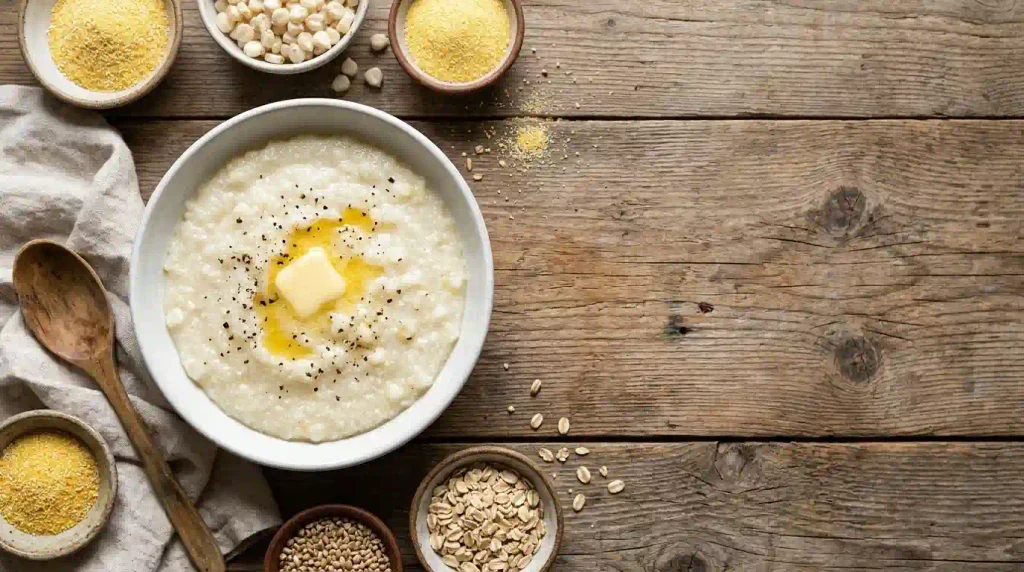
Another word for grits is hominy grits or corn grits. These names describe the same Southern American dish of coarsely ground corn, boiled until creamy. “Grits” has no perfect one-word synonym, so many alternatives are related foods. Examples include polenta, cornmeal mush, porridge, and groats.
The best alternative depends on what you mean. You might mean the ground corn itself, the cooked dish, a similar dish from another country, or grain products in general. In some older or British uses, “grits” can also mean crushed oats.
Quick list: hominy grits, corn grits, hominy, cornmeal mush, corn porridge, polenta, cornmeal, groats, porridge, oatmeal
This article looks at 30 alternatives with meanings, IPA, usage notes, examples, and context. It marks which words are close matches and which are only related.
At a Glance: Grits Synonyms and Related Alternatives
| Alternative | Part of Speech | Meaning | Register / Tone | Ideal Context |
| Hominy grits | noun | The full name for the ground-corn food | Neutral, slightly formal | Menus, recipes, labels |
| Corn grits | noun | Grits made from corn | Neutral | Cooking, food labels |
| Hominy | noun | Corn kernels with the hull removed | Neutral | Southern cooking, ingredient lists |
| Cornmeal mush | noun | Boiled cornmeal porridge | Informal, traditional | Home cooking, history |
| Polenta | noun | Italian dish of boiled, coarse cornmeal | Neutral | Italian recipes, restaurants |
| Cornmeal | noun | Ground dried corn | Neutral | Baking, cooking |
| Groats | noun | Hulled grain broken into pieces | Neutral | Grain and cereal cooking |
| Porridge | noun | Soft food of grain boiled in water or milk | Neutral | Breakfast, general food talk |
| Oatmeal | noun | Ground or rolled oats, or the cooked cereal | Neutral | Breakfast |
| Hot cereal | noun | Cooked grain served hot | Neutral, American | Breakfast, packaged foods |
Which Word Should You Use?
| If you want to… | Use | Why |
| Name the dish exactly | hominy grits | It is the standard full name. |
| Say the ingredient on a food label | corn grits | It is plain and clear to shoppers. |
| Refer to the whole treated kernels | hominy | Hominy means kernels, not ground meal. |
| Talk about the Italian version | polenta | It is the usual name in English for the Italian dish. |
| Describe the old, simple dish | cornmeal mush | It fits historical or rustic settings. |
| Talk about any hot grain breakfast | porridge or hot cereal | These are general words. |
| Name a similar but coarser grain food | groats | Groats are larger pieces than grits. |
| Write about food in general | grain or cereal | These are category words, not synonyms. |
Exploring the Multiple Meanings of “Grits”
1. Coarsely Ground Hulled Grain
- Meaning: Grain with the hull removed that has been ground into coarse pieces.
- Explanation: This is the broad dictionary sense. It can include more than corn, but today it usually points to corn.
- Example: The mill sells fine flour and coarse grits.
2. Ground Hominy, a Southern Dish
- Meaning: Hominy with the germ removed, ground and boiled into a creamy dish.
- Explanation: This is the most common meaning in the United States, especially in the South. Etymonline notes that in the South, hominy meant skinned kernels that could be ground coarsely to make grits.
- Example: She stirred the grits slowly so they would not form lumps.
3. Crushed or Husked Oats
- Meaning: Oats that are coarsely ground or have had their husks removed.
- Explanation: The Oxford dictionary lists this sense, with oatmeal as a main example. It is less common in everyday American English.
- Example: Old cookbooks sometimes call crushed oats “grits.”
4. An Old Sense: Bran or Mill Dust
- Meaning: Bran, chaff, or dust from a mill.
- Explanation: According to the Oxford English Dictionary (as reported by Grammarphobia), this was the original sense in Old English. It is now obsolete.
- Example: In early English texts, the word referred to the waste left after milling.
5. Particle Sizes of an Abrasive
- Meaning: The plural of grit, meaning small hard particles such as sand.
- Explanation: This sense is unrelated to food. It appears in phrases like “sandpaper in three grits.”
- Example: Start sanding with a coarse grit and finish with a fine one.
Sources: Merriam-Webster; Etymonline; Grammarphobia (citing the Oxford English Dictionary); Oxford dictionary entry as shown in WordNet/Oxford lexicon listing.
Analyzing 30 Grits Alternatives in Detail
Some alternatives below are close names for the same food. Others are related foods or category words, and each Usage note says which.
Closest Everyday Alternatives
1. Hominy grits
IPA: US /ˈhɑːməni ɡrɪts/ · UK /ˈhɒmɪni ɡrɪts/
Definition: Coarsely ground hominy, boiled and eaten as a hot dish.
- Usage: This is the closest match. It is the full, slightly formal name for grits.
- Example: The diner serves hominy grits with butter.
2. Corn grits
IPA: US /kɔːrn ɡrɪts/ · UK /kɔːn ɡrɪts/
Definition: Grits made from corn.
- Usage: This is a direct, plain alternative. It is common on food packages.
- Example: Corn grits cook faster when the grind is fine.
3. Hominy
IPA: US /ˈhɑːməni/ · UK /ˈhɒmɪni/
Definition: Corn kernels with the hull removed, eaten whole or ground.
- Usage: This is related, not exact. Hominy often means whole kernels, while grits are ground. In older American usage, the two terms were used interchangeably.
- Example: She added canned hominy to the stew.
4. Cornmeal mush
IPA: US /ˈkɔːrnmiːl mʌʃ/ · UK /ˈkɔːnmiːl mʌʃ/
Definition: A soft dish made by boiling cornmeal in water or milk.
- Usage: This is a closely related dish. It is made from cornmeal, which is often finer than grits, and the name sounds old-fashioned or homey.
- Example: My grandmother fried leftover cornmeal mush for breakfast.
5. Corn porridge
IPA: US /kɔːrn ˈpɔːrɪdʒ/ · UK /kɔːn ˈpɒrɪdʒ/
Definition: A porridge made from ground corn.
- Usage: This is a descriptive, neutral phrase. It is a good choice for readers who do not know the word “grits.”
- Example: Corn porridge is eaten in many parts of the world.
Similar Dishes Around the World
6. Polenta
IPA: US /poʊˈlɛntə/ · UK /pəˈlɛntə/
Definition: An Italian dish of boiled cornmeal, served soft or cooled and sliced.
- Usage: This is a related alternative, not an exact synonym. Polenta is often made with cornmeal and is closely compared to grits.
- Example: The restaurant serves lamb over creamy polenta.
7. Mamaliga
IPA: /ˌmɑːməˈliːɡə/ (US and UK)
Definition: A Romanian dish of boiled cornmeal.
- Usage: This is a related alternative from Romanian cooking. Use it only when writing about that cuisine.
- Example: Mamaliga is often served with cheese and sour cream.
8. Pap
IPA: /pæp/ (US and UK)
Definition: In southern Africa, a porridge made from maize meal.
- Usage: This is a related, regional alternative. In general English, “pap” can also mean soft food for babies, so context matters.
- Example: They ate pap with grilled meat.
9. Ugali
IPA: US /uˈɡɑːli/ · UK /uːˈɡɑːli/
Definition: A stiff maize dish eaten in East Africa.
- Usage: This is a related dish, not a synonym. It is firmer than most grits.
- Example: He rolled a piece of ugali and dipped it in the sauce.
10. Congee
IPA: US /ˈkɑːndʒi/ · UK /ˈkɒndʒiː/
Definition: A rice porridge eaten in many parts of Asia.
- Usage: This is only a loosely related alternative. It is made from rice, not corn, but it is a similar kind of soft, savory porridge.
- Example: She ordered congee with ginger for breakfast.
Corn and Coarse-Meal Ingredients
11. Cornmeal
IPA: US /ˈkɔːrnmiːl/ · UK /ˈkɔːnmiːl/
Definition: Dried corn ground into meal.
- Usage: This is related. Cornmeal is the ingredient, and it is usually not the same thing as grits, although coarse cornmeal can be close.
- Example: The recipe needs one cup of cornmeal.
12. Meal
IPA: /miːl/ (US and UK)
Definition: Coarsely ground grain.
- Usage: This is a broad, general term. Use it for any ground grain, not only corn.
- Example: The mill sells oat meal and corn meal.
13. Samp
IPA: /sæmp/ (US and UK)
Definition: Dried maize kernels that have been crushed or broken, used in southern Africa and some other places.
- Usage: This is a related food. It is coarser than most grits.
- Example: Samp is often cooked slowly with beans.
14. Masa harina
IPA: /ˈmɑːsə əˈriːnə/ (US and UK)
Definition: A flour made from corn treated with lime, used for tortillas and tamales.
- Usage: This is related, not a synonym. Masa harina is a fine flour, not a coarse meal like grits.
- Example: Masa harina is the main ingredient in homemade tortillas.
15. Cracked corn
IPA: US /krækt kɔːrn/ · UK /krækt kɔːn/
Definition: Corn kernels broken into small pieces.
- Usage: This is related and loose. It often describes animal feed, so it is not a good menu word.
- Example: The farmer fed the chickens cracked corn.
Other Broken or Ground Grains
16. Groats
IPA: US /ɡroʊts/ · UK /ɡrəʊts/
Definition: Hulled grain broken into pieces larger than grits.
- Usage: This is a close related word. Merriam-Webster defines groats in relation to grits, and says groats are the larger pieces.
- Example: Buckwheat groats can be boiled like rice.
17. Steel-cut oats
IPA: US /stiːl kʌt oʊts/ · UK /stiːl kʌt əʊts/
Definition: Whole oat grains cut into small pieces.
- Usage: This is related. It fits the old oat sense of “grits” better than the corn sense.
- Example: Steel-cut oats take longer to cook than rolled oats.
18. Cracked wheat
IPA: /krækt wiːt/ (US and UK)
Definition: Wheat kernels broken into small pieces.
- Usage: This is a related grain product. It is not made from corn.
- Example: She stirred cracked wheat into the soup.
19. Semolina
IPA: /ˌsɛməˈliːnə/ (US and UK)
Definition: Coarsely ground durum wheat, used for pasta and puddings.
- Usage: This is related, not a synonym. It is a coarse wheat meal.
- Example: The baker dusted the tray with semolina.
20. Farina
IPA: /fəˈriːnə/ (US and UK)
Definition: Fine-ground wheat used for hot cereal.
- Usage: This is a related breakfast food. It is smoother than grits.
- Example: He ate farina with milk and sugar.
Hot Cereal and Porridge Words
21. Porridge
IPA: US /ˈpɔːrɪdʒ/ · UK /ˈpɒrɪdʒ/
Definition: A soft food made by boiling grain in water or milk.
- Usage: This is a broad, useful alternative for cooked grits. It is the most common word in British English.
- Example: The porridge was thick and warm.
22. Oatmeal
IPA: US /ˈoʊtmiːl/ · UK /ˈəʊtmiːl/
Definition: Ground or rolled oats, or the porridge made from them.
- Usage: This is related and matches the Oxford oat sense. In everyday American English, grits means corn and oatmeal means oats.
- Example: She chose oatmeal instead of grits.
23. Mush
IPA: /mʌʃ/ (US and UK)
Definition: A soft, thick food, especially boiled cornmeal in the United States.
- Usage: This is informal and sometimes unkind in tone. It can also mean any soft mass.
- Example: The children called the dish “corn mush.”
24. Gruel
IPA: /ˈɡruːəl/ (US and UK)
Definition: A thin porridge made by boiling grain in water or milk.
- Usage: This is related, but it is thinner and often suggests poor or plain food.
- Example: The story describes a bowl of thin gruel.
25. Hot cereal
IPA: US /hɑːt ˈsɪriəl/ · UK /hɒt ˈsɪəriəl/
Definition: A grain food cooked and served hot, often for breakfast.
- Usage: This is a category term. It includes grits, oatmeal, and farina.
- Example: Grits are a kind of hot cereal.
Broader and Category Terms
26. Grain
IPA: /ɡreɪn/ (US and UK)
Definition: The small, hard seed of a cereal plant such as corn, wheat, or oats.
- Usage: This is a category word, not a synonym. Grits are made from grain.
- Example: The mill grinds local grain.
27. Cereal
IPA: US /ˈsɪriəl/ · UK /ˈsɪəriəl/
Definition: A grass grown for its edible grain, or a food made from such grain.
- Usage: This is a broad related word. It can mean breakfast cereal in a box, which is not grits.
- Example: Corn is a cereal crop.
28. Staple food
IPA: US /ˈsteɪpəl fuːd/ · UK /ˈsteɪpəl fuːd/
Definition: A food eaten regularly as a main part of a diet.
- Usage: This is a category phrase. Use it when grits are a regular part of the diet.
- Example: Grits were a staple food in many Southern homes.
29. Side dish
IPA: /ˈsaɪd dɪʃ/ (US and UK)
Definition: A food served along with the main dish.
- Usage: This is a role word, not a synonym. It describes how grits are often served.
- Example: Grits are a popular side dish with fish.
30. Grist
IPA: /ɡrɪst/ (US and UK)
Definition: Grain that is to be ground.
- Usage: This is a related milling word. It names grain before grinding, not the ground product.
- Example: The miller weighed the grist before grinding.
Sources: Merriam-Webster (grits, groats, hominy entries); Etymonline (grits, hominy); Oxford dictionary entry for grits; Grammarphobia.
Grits vs. Polenta vs. Cornmeal Mush
| Term | Main Meaning | Usual Region | Note |
| Grits | Coarsely ground corn, boiled | Southern United States | Often tied to hominy |
| Polenta | Boiled coarse cornmeal | Italy | Can be served soft or sliced |
| Cornmeal mush | Boiled cornmeal | United States | Older, homey name |
All three are cooked corn dishes. The main differences are the region, the traditional corn type, and the name used on menus.
Sources: Merriam-Webster; Etymonline.
Grits and Related Word Pairs
| Word | Paired Word | Note |
| Grits | Groats | Groats are larger pieces of hulled grain. |
| Grits | Hominy | Hominy is the kernel, and grits are the ground form. |
| Grits | Oatmeal | Both are hot cereals, but corn and oats differ. |
| Grits | Eggs | A common breakfast pairing. |
| Grits | Shrimp | A popular dish pairing. |
Grits have no true opposite. The pairs above show contrasts or common food partners. Readers should treat them as comparisons, not antonyms.
Sources: Merriam-Webster; Etymonline.
Common Word Partners of “Grits”
| Pattern | Common Partners | Example |
| Type + grits | stone-ground, instant, quick, cheese | I prefer stone-ground grits. |
| Color + grits | white, yellow | White grits are common in some regions. |
| Verb + grits | cook, stir, serve | Stir the grits often while they cook. |
| Bowl or serving | a bowl of, a side of | He ordered a side of grits. |
| Food + grits | shrimp and, eggs and | We had shrimp and grits for dinner. |
Sources: Merriam-Webster example sentences and general dictionary usage patterns.
Idiomatic Phrases Featuring “Grits”
“Grits” has few true idioms. The items below are established expressions, not idioms in the strict sense.
1. Shrimp and grits
- Meaning: A well-known Southern dish of shrimp served over grits. It is a dish name, not a figure of speech.
- Example: The café is famous for its shrimp and grits.
2. Cheese grits
- Meaning: Grits cooked with cheese. It is a common menu name.
- Example: She made cheese grits for brunch.
3. Nitty-gritty
- Meaning: The basic facts of a situation or problem.
- Example: Let’s get to the nitty-gritty of the budget.
Note that “nitty-gritty” is related to grit, not clearly to grits. Etymonline says it may come from “nit and grits,” but it presents this only as a possibility.
Sources: Etymonline; Merriam-Webster.
Word Formation of “Grits”
Etymology & Structure
“Grits” is the plural form of grit, meaning coarsely ground grain. Etymonline traces it to Old English grytt (plural Grytta), meaning coarse meal, from Proto-Germanic *grutja-. It is related to grit meaning sand, and the two words influenced each other over time.
Date and History
The Oxford English Dictionary, as reported by Grammarphobia, records Grytt in Old English around 700, with the early meaning of bran, chaff, or mill dust. Merriam-Webster gives 1579 for the main meaning of “grits.” For corn, Merriam-Webster gives 1876 for “hominy grits,” and the OED’s first American citation is from 1886.
Word Class Variations
- Noun: grits (plural in form, but used with a singular or plural verb)
- Related noun and verb: grit
- Related adjective: gritty (from grit)
Both “The grits are good” and “The grits are good” are accepted.
Sources: Etymonline; Merriam-Webster; Grammarphobia (citing the Oxford English Dictionary and the American Heritage Dictionary).
Common Word-Choice Mistakes
- “A grit of corn”: use “a serving of grits” or “a grain of corn.”
- “Grits and hominy are identical”: hominy is usually the whole treated kernel, and grits are ground.
- “Grits and groats are the same”: groats are larger pieces of hulled grain.
- “Polenta is always grits”: polenta is an Italian dish, and it is related but not identical.
- “Grits means only oats”: in American English it usually means corn.
- “Corn grits are a cereal box product”: cereal and grits are different foods, though both can be eaten hot.
- “Mush is a polite menu word”: it can sound unappetizing, so “porridge” or “grits” is better on a menu.
Frequently Asked Questions
What is the closest synonym for grits?
The closest match is “hominy grits.” “Corn grits” is also direct.
Is grits singular or plural?
It is plural in form but can take a singular or plural verb. “The grits are good” and “The grits are good” are both accepted.
What is the difference between grits and hominy?
Hominy usually means whole, treated corn kernels. Grits are the ground form.
What is the difference between grits and polenta?
Both are boiled coarse corn dishes. Grits belong to the Southern United States, and polenta is Italian.
Are grits the same as oatmeal?
No. In American English, grits are corn, and oatmeal is oats. Older Oxford entries include an oat sense for “grits.”
What is a general word for foods like grits?
“Porridge” and “hot cereal” are the best general terms.
Are groats the same as grits?
No. Merriam-Webster says groats are hulled grain broken into pieces larger than grits.
What is a formal alternative to grits?
“Hominy grits” or “coarsely ground corn meal” is the more formal choice.
Does grits have an antonym?
No. It has no true opposite, only contrasting foods such as groats or oatmeal.
Where does the word grits come from?
It comes from Old English Grytt, meaning coarse meal, and is related to the word grit.
Conclusion
The closest alternatives to grits are hominy grits and corn grits. Related words such as cornmeal mush, polenta, porridge, and groats cover similar foods but are not exact matches.
Context decides the best word. Some terms name an ingredient, some name a dish, and some name a whole category of grain foods. Even close words like hominy and groats differ in how they are ground, treated, or used.
To choose well, first decide what you mean: the ground corn, the cooked dish, or a similar food from another culture. Then pick the word that fits that meaning and your audience.

Sakina Anas is a passionate content writer at NestsDaily.com with 3 years of experience in synonyms, vocabulary, and English language learning. She helps readers discover alternative words, understand their meanings, and improve their English skills through simple, clear, and engaging content.